Soft Washing vs. High Pressure Washing: What’s the Difference?
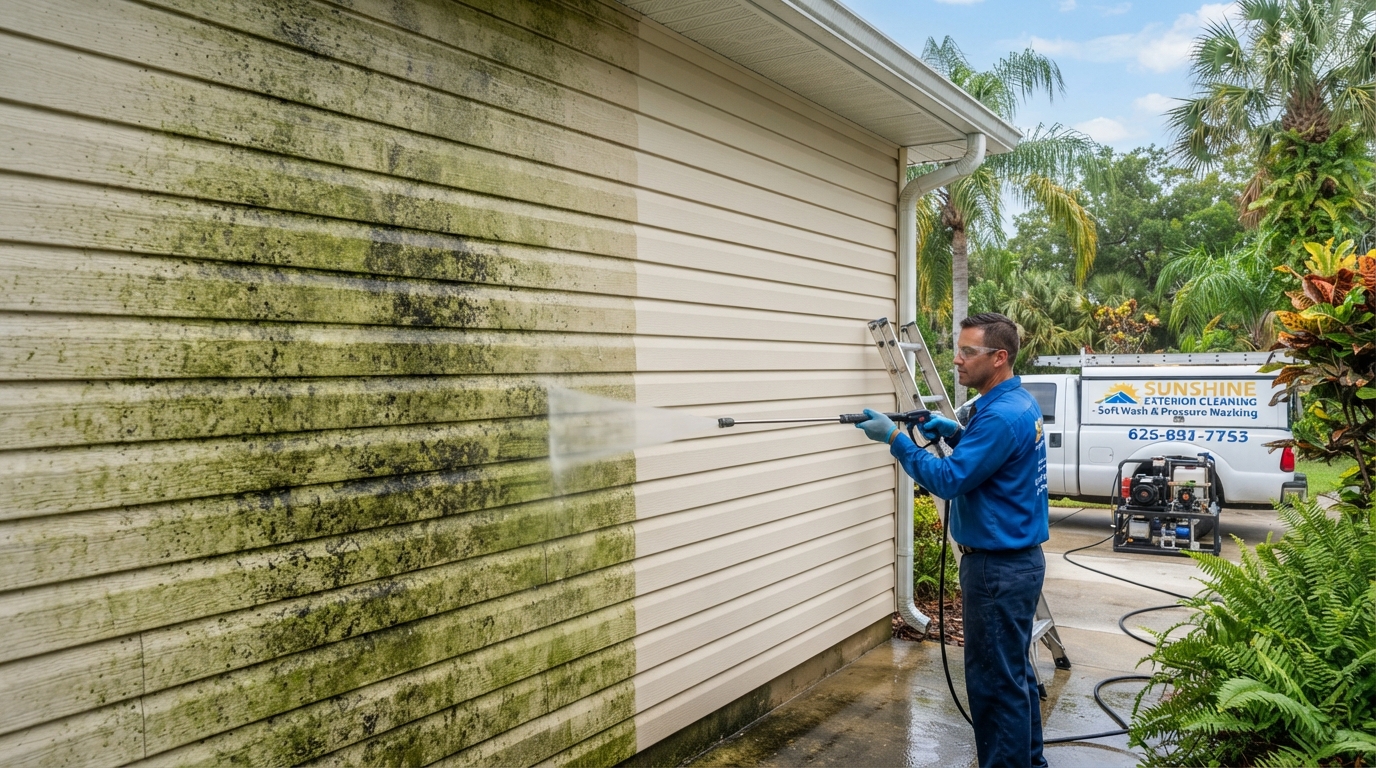
When it comes to maintaining your property, many homeowners assume that more pressure equals a cleaner surface. In reality, using high pressure on delicate surfaces like roofs, vinyl siding, stucco, or painted wood is one of the fastest ways to cause thousands of dollars in property damage.
What Is High Pressure Washing?
High pressure washing uses water propelled at 2,500 to 4,000+ PSI (Pounds per Square Inch). It relies primarily on mechanical force to blast away dirt, grease, and heavy buildup.
Best Used For: - Unsealed concrete driveways and sidewalks - Solid brick or stone retainers - Parking lots and commercial loading docks
What Is Soft Washing?
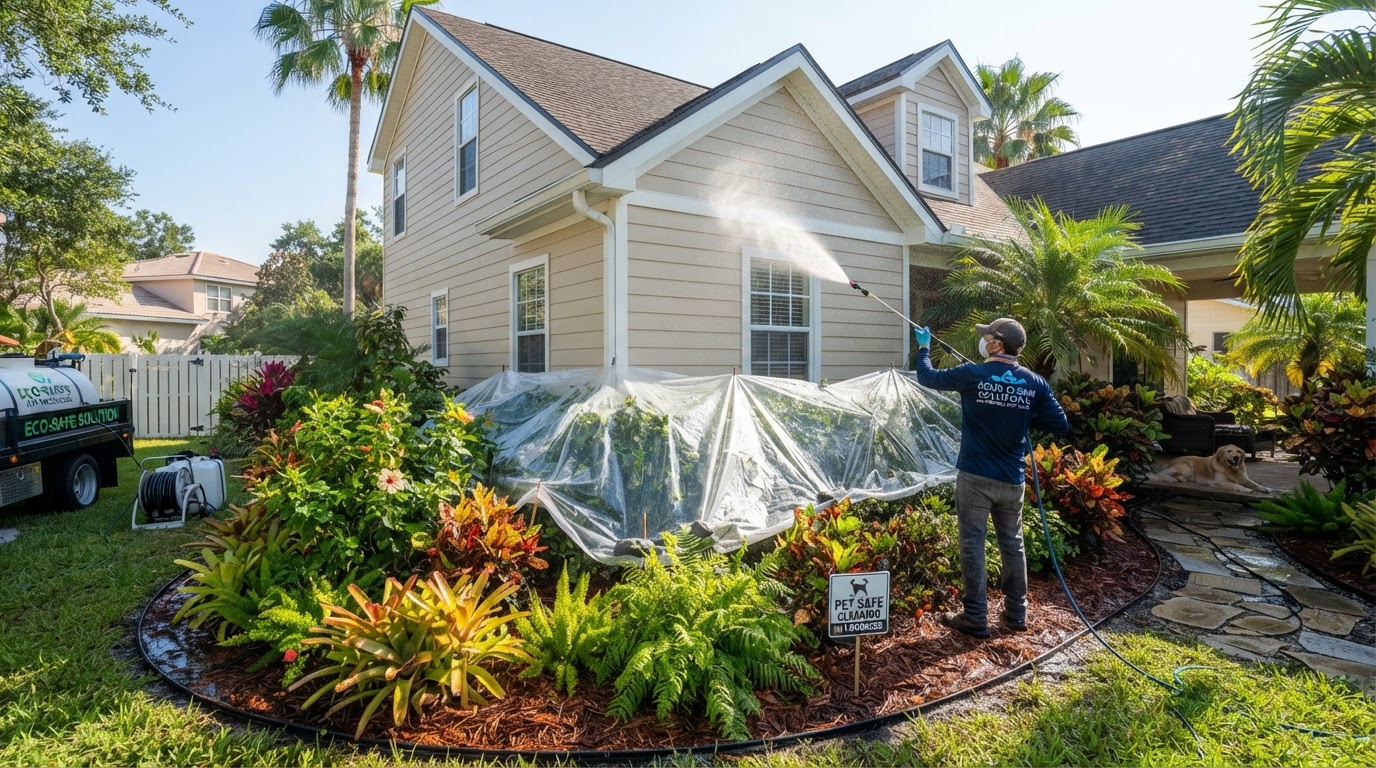
Soft washing delivers water at under 500 PSI—roughly equivalent to a strong garden hose nozzle. Instead of relying on raw pressure, soft washing uses specialized, eco-friendly detergents to break down algae, bacteria, lichen, and mildew at a microscopic level.
Essential For: - Roof shingles (asphalt, tile, metal) - Vinyl siding, Hardie plank, and aluminum - Stucco, dryvit, and painted trim - Wood decks and vinyl fencing
The Risks of DIY Pressure Washing
- Siding Water Intrusion: Blasting vinyl siding from below can trap water inside walls, leading to indoor toxic mold growth.
- Etched Concrete: Excessive PSI strips top cement layers, leaving permanent swirl marks.
- Stripped Shingle Granules: Blasting roof shingles strips protective limestone granules, dramatically shortening roof life.